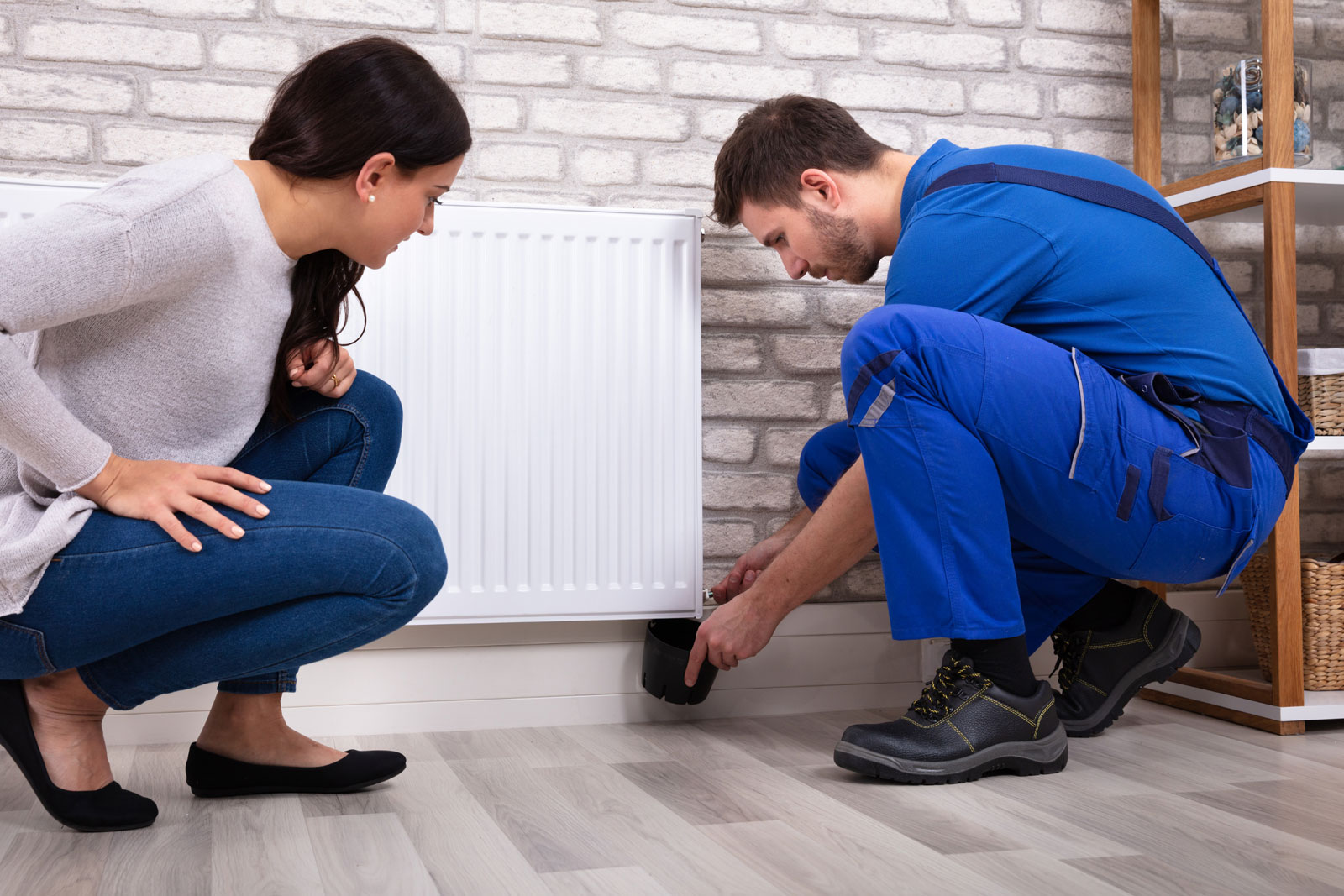
Are your radiators not distributing heat properly? This could be a sign that you need to bleed your Radiators. This allows for hot water to circulate through your heating system as efficiently as possible – keeping your home warm and helping to decrease your bills!
This is a quick and easy job, taking no longer than 30 seconds to remedy.
Bleeding your radiators: Step by Step.
Top Tip: If you are planning on bleeding multiple radiators, start with the one located furthest from your boiler and work your way along.
Step 1: Make sure your heating is fully switched off and the radiator(s) are cold to the touch.
Step 2: Hold a cloth or old tub underneath the bleed valve (usually located at the top of your radiator) and insert the bleed key. A bleed key can be bought from any hardware store for under £2, alternatively, use a flathead screwdriver.
Step 3: Turn anti-clockwise until air begins to escape (this should make a hissing noise).
Step 4: When air stops escaping and water begins to leak, turn the key clockwise to re-tighten the valve.
Step 5: Repeat on other radiators if necessary.
Step 6: Switch the heating back on and check if your radiators are heating up properly.
Once you have completed the above steps, it is always a good idea to check your boiler pressure. Bleeding radiators has a tendency to lower boiler pressure, so this may need topping up.
Your boiler pressure should ideally sit between 1.0 and 1.5 bars.
Why should I bleed my radiator?
If your heating system is full of air pockets, hot water is unable to flow correctly around the system and decreases efficiency. This can, over time, place more pressure on your boiler and cost you more money in the long-run.
What if I am still experiencing heating issues?
If you are still experiencing long-term issues with your heating, give us a call on 0800 193 0979 and we will put you in touch with one of our skilled engineers who can locate and remedy the problem in no time!